Of all the quality checks that happen before an avocado ever reaches a packhouse, few matter as much as dry matter content testing. It is the standard, science-based method the avocado industry relies on to answer a deceptively simple question: is this fruit actually mature enough to harvest?
What Dry Matter Content Measures
Dry matter content refers to the proportion of an avocado’s flesh that consists of solid material — oils, sugars, and other compounds — once all the water has been removed. It is usually expressed as a percentage. A sample of avocado flesh is weighed, dried in an oven until all moisture has evaporated, and weighed again; the difference between the two weights, expressed as a percentage of the original weight, gives the dry matter reading.
Dry matter content rises steadily as an avocado matures on the tree. Because oil and dry matter accumulate together as the fruit develops, dry matter percentage is widely used across the global avocado industry as a reliable proxy for maturity, and by extension, for how well a piece of fruit will ripen and taste once it softens.
Why Dry Matter Testing Is the Industry Standard
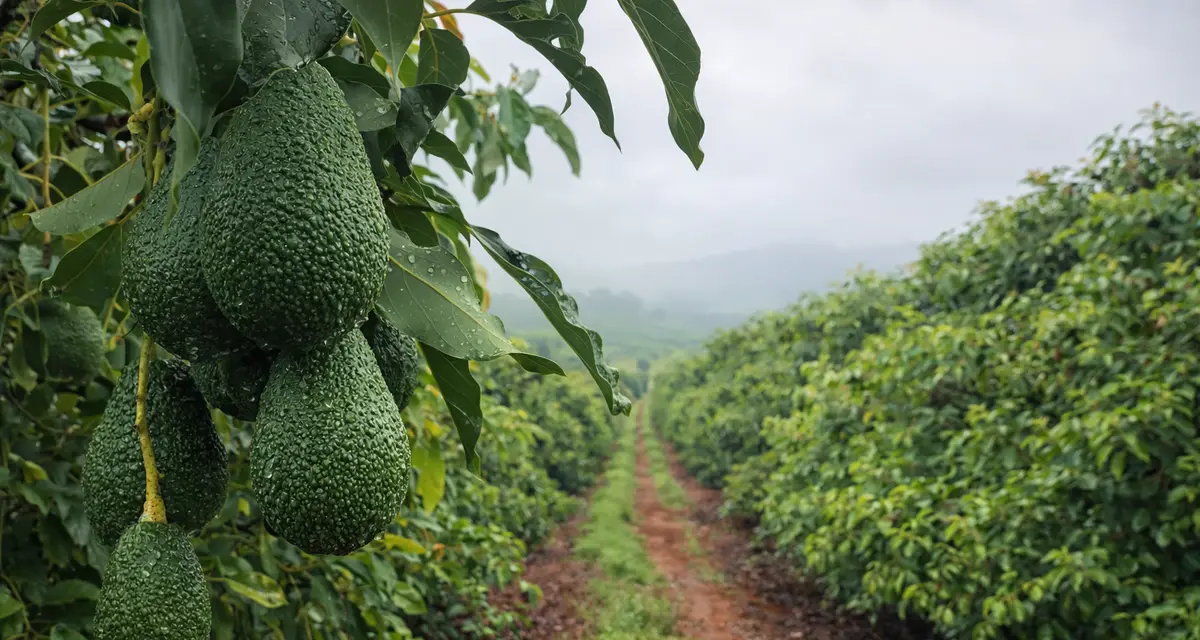
Unlike many fruits, avocados do not ripen on the tree — they only begin to soften and develop full flavor after being picked. This creates a real risk: if fruit is harvested too early, it may never ripen properly at all, no matter how it is stored or handled afterward. Visual cues like size or skin color are not reliable enough on their own to catch this, particularly for varieties that stay green-skinned even when mature.
Dry matter testing solves this by giving growers and packhouses an objective, repeatable number to check before harvest begins. It is commonly cited as the most reliable single indicator of avocado maturity used across major exporting countries, which is part of why it has become close to a universal benchmark in the trade — even though the exact minimum threshold applied can vary by variety, season, and destination market.
Commonly Cited Dry Matter Guidance
Industry guidance for Hass avocados destined for export commonly cites a minimum dry matter threshold somewhere in the low-to-mid 20 percent range, with figures around 21 to 24 percent frequently referenced across producing countries and import markets. These figures should be treated as general industry benchmarks rather than a fixed universal rule — different markets, certification schemes, and even individual seasons can shift the specific number considered acceptable. Exporters and packhouses typically work to whatever threshold is appropriate for the variety, season and destination market in question, rather than applying a single number across every shipment.
How Maturity at Harvest Affects Ripening After Export
The dry matter reading taken before harvest has consequences that play out weeks later, often in a completely different country. Fruit harvested below the appropriate maturity threshold tends to:
- Take unusually long to soften, or fail to ripen at all
- Ripen unevenly, with some areas of the flesh softening while others stay firm or rubbery
- Develop poor flavor, off-textures, or a lack of the characteristic nutty richness associated with mature avocados
- Shrivel or shrink in cold storage rather than ripening normally once removed from the cold chain
Because export shipments spend days or weeks in transit and cold storage before reaching a retail shelf, there is no opportunity to “go back” and re-check maturity once fruit has left the farm. This is exactly why dry matter testing happens before harvest, not after — it is a preventative check, not a corrective one.
Where Dry Matter Testing Fits in the Export Process
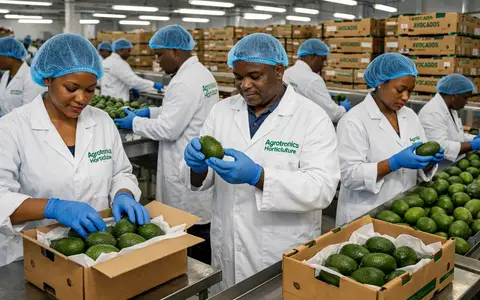
Dry matter testing is fundamentally a pre-harvest decision tool used by growers and exporters to decide when a block of trees is ready to pick. It complements, rather than replaces, the size and quality grading that happens later in the packhouse. A fruit can be the correct size and free of visible defects and still be an unsuitable export candidate if it was picked before reaching adequate maturity — which is why responsible exporters treat dry matter testing as a non-negotiable step ahead of harvest scheduling, well before fruit ever reaches the grading line.
Getting this step right protects everyone downstream in the supply chain: it reduces the risk of rejections and downgrades at the importing end, protects the exporter’s reputation with buyers, and ultimately ensures that consumers get the eating experience they expect from a properly ripened avocado.