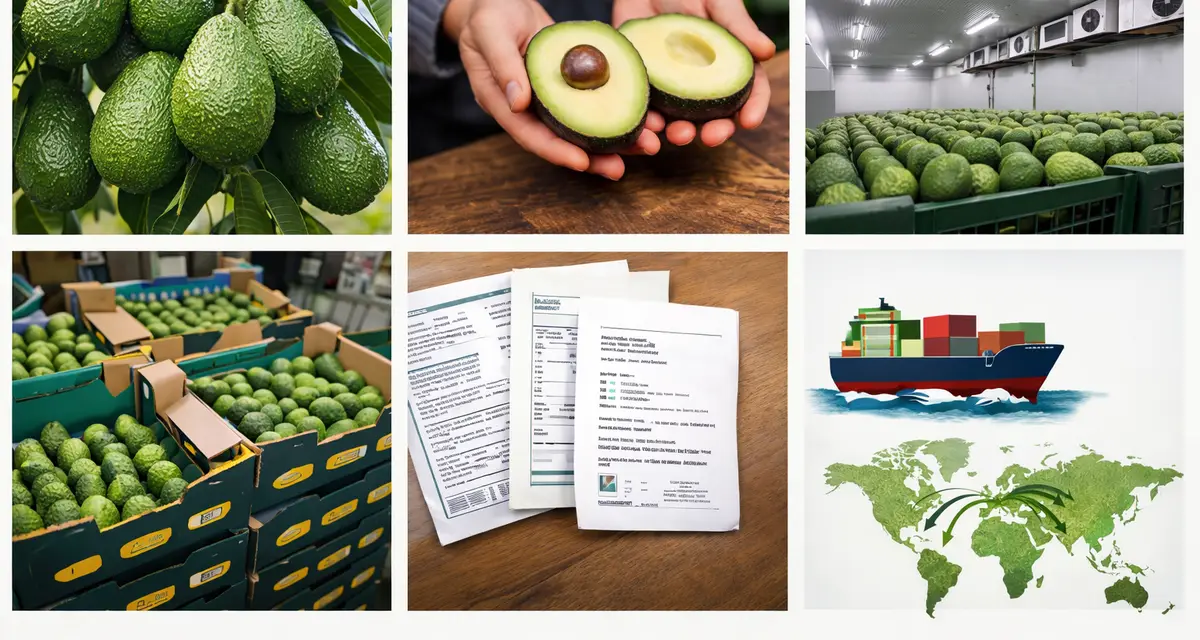
Anyone researching the paperwork and standards behind avocado exports will eventually run into the acronym IPPC. Unlike a certificate a single exporter applies for, the IPPC is a much bigger piece of the puzzle — it is the international treaty framework that underpins almost every plant health rule applied at borders around the world, including the rules that govern how Kenyan avocados move into international markets.
What the IPPC Actually Is
The International Plant Protection Convention (IPPC) is a multilateral treaty, overseen through the United Nations’ Food and Agriculture Organization, that exists to protect the world’s plant resources from the spread of pests and diseases through international trade. It was first adopted in 1951 and has since been ratified by the vast majority of trading nations, making it one of the most widely adopted plant health agreements in existence.
The IPPC itself does not inspect a single carton of avocados. Instead, it sets International Standards for Phytosanitary Measures (ISPMs) — a shared rulebook that each member country’s National Plant Protection Organization (NPPO) then applies domestically. In Kenya, that national authority is the Kenya Plant Health Inspectorate Service (KEPHIS), which issues the phytosanitary certificates that accompany export consignments. For the country-specific certificate process, see our guide to the KEPHIS phytosanitary certificate.
How IPPC Standards Show Up in Avocado Export Practice
For an avocado exporter, IPPC compliance is less an abstract legal concept and more a set of practical, day-to-day handling requirements. These typically include:
- Pest-free sourcing and field hygiene — fruit must come from areas or production systems managed to avoid regulated pests, supporting the area freedom or pest risk management claims made on export documentation.
- Inspection before certification — consignments are inspected by the national plant protection organization to confirm they are free of pests of quarantine concern before a phytosanitary certificate is issued.
- Treated wood packaging (ISPM 15) — where wooden pallets or crates are used in an export shipment, the timber must be treated (commonly through heat treatment) and marked to show it will not carry wood-boring pests into the destination country.
- Traceability through the supply chain — being able to trace fruit back to its source farm or block supports pest risk management and helps resolve any compliance questions quickly.
None of these requirements are unique inventions of any single exporter — they are the practical expression, at packhouse and farm level, of standards that exist because of the IPPC framework.
Why Importing Countries Care
Every avocado-importing country runs its own biosecurity system, and most of those systems are themselves built around IPPC standards. When an importing country’s plant health authority decides whether to allow Kenyan avocados across its border, it is — directly or indirectly — relying on the credibility of Kenya’s IPPC-aligned phytosanitary system. A weak or non-compliant system increases the risk that a country will restrict or suspend imports from a trading partner.
This is why IPPC compliance is closely tied to market access. A country that cannot reliably demonstrate IPPC-aligned plant health controls will struggle to negotiate or maintain access to demanding markets such as the European Union, which apply strict phytosanitary import conditions.
IPPC Compliance and Other Certifications
IPPC compliance sits alongside, rather than instead of, other certifications an exporter will typically hold. GLOBALG.A.P. addresses on-farm good agricultural practice, AFA licensing covers the regulatory authority to operate as an exporter in Kenya, and the KEPHIS phytosanitary certificate is the consignment-specific document confirming plant health compliance for that shipment. Together, these form the compliance backbone behind any consignment moving through export documentation and compliance processes.
The Bottom Line
IPPC compliance is not a single form to fill in — it is the underlying global standard that shapes how avocados are sourced, handled, packaged and certified for international trade. Exporters who align their packhouse and farm practices with IPPC-derived standards are, in effect, building the foundation that every other phytosanitary document and inspection ultimately relies on.