Carton choice is one of those decisions that looks purely logistical on the surface but actually has a direct effect on quality, cost, and how easily a buyer can move fruit through their own distribution chain. Across the global avocado trade, two carton formats dominate: 4kg and 10kg.
Why 4kg and 10kg Are the Industry Standard
Avocado export cartons are sized in round, practical weight bands that make sense for handling, palletizing and retail logistics. A 4kg carton and a 10kg carton are by far the most widely used formats across exporting countries, largely because they map neatly onto two distinct buyer needs: retail-ready display on one hand, and bulk or wholesale handling on the other.
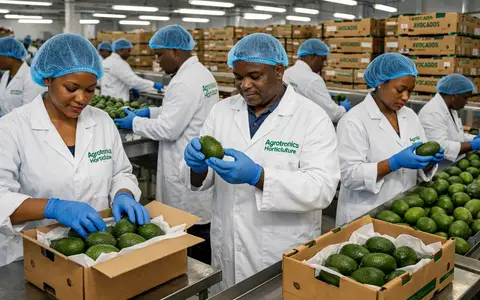
Agrotronics Horticulture packs graded avocados into both standard 4kg and 10kg export cartons at our Nairobi packhouse, alongside fully customised carton sizing where a buyer’s specification calls for it. See our avocado packaging service for the full detail on our carton, labelling and traceability options.
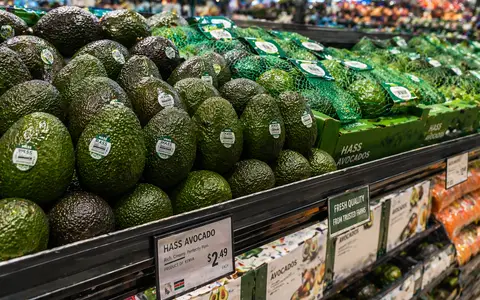
4kg Cartons: Built for Retail
A 4kg carton is generally the smaller, retail-oriented format. Its size makes it practical for:
- Direct placement on supermarket shelves with minimal repacking
- Smaller, more frequent retail orders
- Buyers who want a carton format closely matched to consumer-facing display
Because retail buyers often want consistent, attractive presentation straight out of the box, the 4kg format pairs naturally with the kind of private label and branded packaging many supermarket chains request.
10kg Cartons: Built for Bulk and Wholesale
A 10kg carton is the larger bulk format, generally favored by:
- Wholesale buyers and distributors who will repack or redistribute fruit themselves
- Buyers prioritizing logistics efficiency — fewer, larger cartons per pallet — over retail-ready presentation
- Markets where fruit moves through additional intermediaries before reaching the final retail point
The 10kg format tends to suit buyers focused on cost-efficient bulk movement rather than shelf-ready packaging, since the fruit will typically be handled and possibly repacked again before it reaches a consumer.
Carton Choice and Cold Chain Protection
Carton format is not just about weight and convenience — it has a direct relationship with how well fruit is protected in transit. Whichever format is used, avocado export cartons need to:
| Requirement | Why it matters |
|---|---|
| Adequate ventilation | Avocados continue to respire after harvest; airflow prevents heat buildup that can accelerate ripening or trigger decay |
| Structural strength | Cartons must support stacking on pallets without crushing fruit at the bottom of the stack |
| Consistent internal sizing | Properly sized internal cells or trays reduce fruit movement and abrasion during transit |
| Compatibility with cold storage | Carton design needs to allow cold air to circulate evenly through a palletized stack |
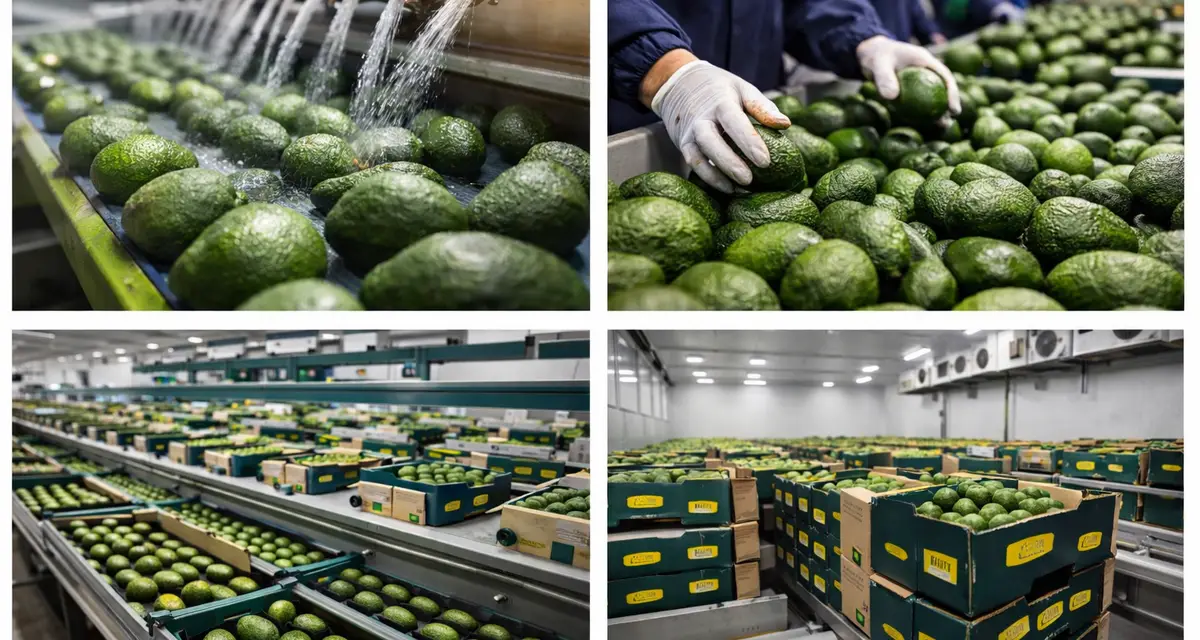
Once packed, cartons move directly into cold storage, so carton design and ventilation directly affect how evenly and quickly fruit cools — a factor that has knock-on effects for shelf life all the way through to the destination market.
Matching Carton Format to Buyer Needs
Ultimately, the right carton size depends on who the buyer is and what they intend to do with the fruit once it lands. A retail chain wanting shelf-ready cartons will typically prefer the 4kg format, often paired with private branding. A wholesale distributor moving large volumes through their own network will more often request 10kg cartons for handling efficiency. Because needs vary by buyer and market, exporters that can offer both standard formats — plus customised sizing — are better placed to meet a wide range of purchase order specifications without forcing every buyer into a one-size-fits-all carton.
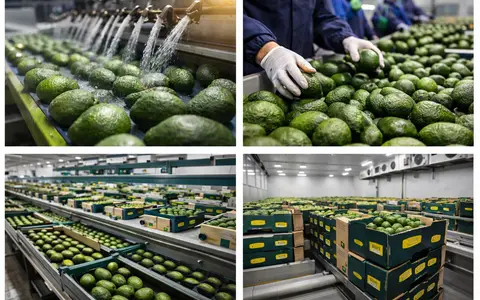
Carton choice sits within the broader packhouse process, following directly after washing and grading, and feeding straight into cold storage and dispatch.