Between a farm in the Kenyan highlands and a supermarket shelf in Europe or the Middle East, every export avocado passes through a packhouse — and what happens inside that packhouse determines almost everything about the fruit’s final quality. The packhouse process is where raw, freshly harvested avocados are transformed into uniform, traceable, export-ready consignments through three connected stages: washing, grading, and packaging.
Why the Packhouse Stage Exists
Avocados arrive at the packhouse straight from the farm, carrying field dirt, natural latex residue from the cut stem, and a wide natural range of sizes and quality levels. International buyers, by contrast, expect clean, uniformly sized, correctly graded fruit packed to a specific carton specification. The packhouse is the stage that closes this gap — and at a well-run facility, it operates as a connected line rather than a series of disconnected tasks, with each step feeding directly into the next.
Stage One: Washing
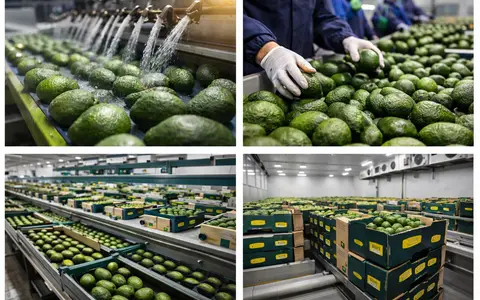
The process begins with washing. Fruit passes through a mechanized, food-safe water system designed to remove dirt, latex and field residue picked up during harvest. This step matters more than its simplicity suggests. Avocado latex — a milky sap released from the cut stem — can run down the fruit’s skin and cause visible staining or blemishing if it is not properly rinsed off before the fruit sits for any length of time. Removing it early protects the skin’s appearance through the rest of the supply chain.
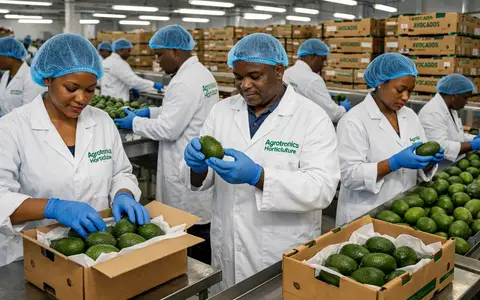
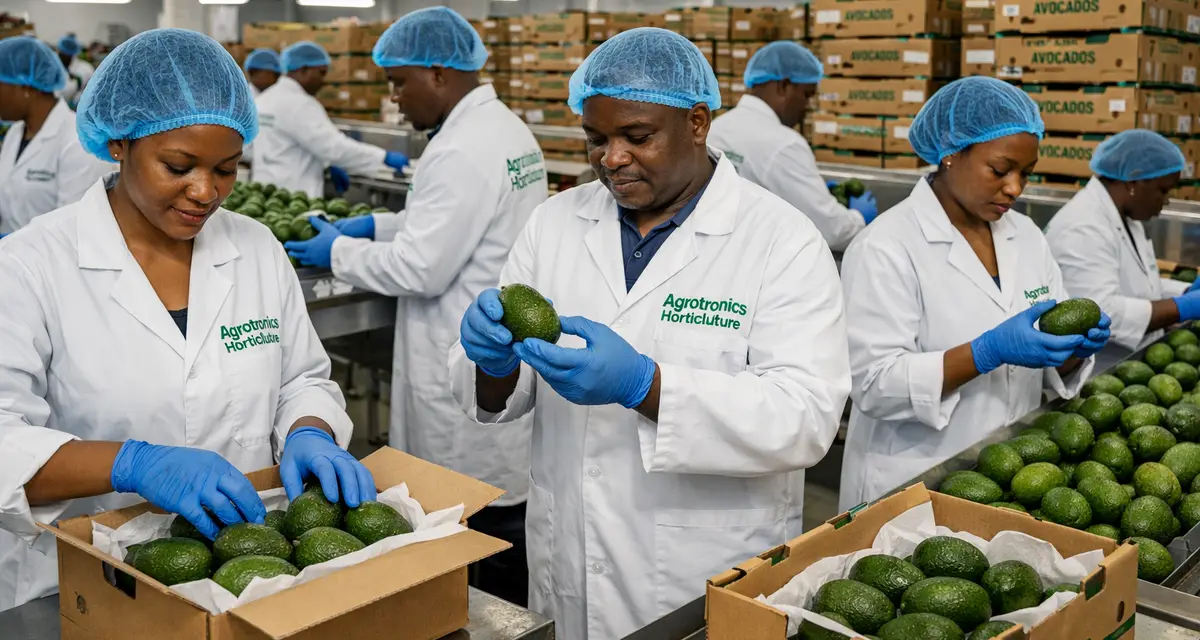
Washing also sets up the next stage for accuracy. Dirt and latex residue can mask surface defects, so a thorough wash makes it far easier for inspection staff to spot any damaged or substandard fruit before it proceeds further down the line. After washing, fruit typically undergoes a manual post-wash inspection where visibly defective produce is pulled out before grading begins. For more on this stage, see our avocado washing service.
Stage Two: Grading
Once washed and inspected, fruit moves to grading — widely considered the most consequential stage in the packhouse process. Using automated grading machines, avocados are sorted by size, weight and overall uniformity. This stage exists because a single harvest naturally produces fruit across a wide size range, while international buyers order against a specific size or count specification per carton.
Grading allocates each piece of fruit to the size and quality band requested by a particular buyer or destination market, and uniformity within a batch is checked just as closely as the grade itself — a carton with mismatched sizes can be downgraded even if every individual avocado is otherwise sound. For the detailed standards behind this stage, see our avocado grading standards guide, and for the full service detail, visit our avocado grading page.
Stage Three: Packaging
Graded fruit then moves to packaging, the final packhouse stage before cold storage. Avocados are packed into export-grade cartons — most commonly in standard 4kg or 10kg formats, though fully customised carton sizing is also available to match a specific buyer specification. Packaging options can include private labelling and branding for retail buyers who want their own brand presented on shelf, alongside standard generic export cartons.
Every carton is also barcoded for traceability, linking it back to its source batch, grading run and processing date — a feature that matters both for resolving quality questions later and for meeting buyer requirements around supply chain transparency. Full detail on this stage is available on our avocado packaging page.
The Critical Handoff: Immediate Cold Transfer
The packhouse process does not end once a carton is sealed. Packed cartons move directly into cold storage, minimizing the time fruit spends at ambient temperature between packing and the start of the cold chain. Because avocados are highly perishable and continue ripening after harvest, this handoff is treated as part of the packhouse workflow itself rather than a separate, later step — any delay here can undo the quality benefit of careful washing, grading and packing.
Why Treating It as One Connected Workflow Matters
| Stage | What it solves |
|---|---|
| Washing | Removes dirt and latex; sets up accurate defect inspection |
| Grading | Sorts fruit into consistent size and quality bands matching buyer orders |
| Packaging | Protects fruit physically and presents it to buyer specification |
| Cold transfer | Preserves firmness and shelf life immediately after packing |
Each stage compensates for a different kind of variability in raw, freshly harvested fruit, and each depends on the one before it being done correctly — washing makes grading more accurate, grading makes packaging meaningful, and packaging only protects fruit quality if cold transfer happens promptly afterward.
A Connected Process, Not a Checklist
Understood this way, the packhouse process is less a checklist of separate tasks and more a single continuous workflow, where each stage protects the value created by the one before it. For exporters, treating washing, grading and packaging as one integrated line — rather than isolated steps — is a major part of what separates consistently export-grade consignments from shipments that run into quality disputes and rejections at the destination market. To see how this fits into the broader journey from farm to export, read our complete guide on how to export avocados from Kenya, or explore the full packhouse operations service directly.