Anyone evaluating avocado export from Kenya quickly runs into the same question: what does it actually cost to get fruit from a Kenyan farm onto a shelf overseas? There is no single figure that answers this, because the cost of exporting avocados is built up from several distinct stages, each with its own cost drivers. Understanding this structure is more useful than chasing a single per-kilogram number, since the right cost for one exporter’s setup may be entirely wrong for another’s.
Packhouse Processing Costs
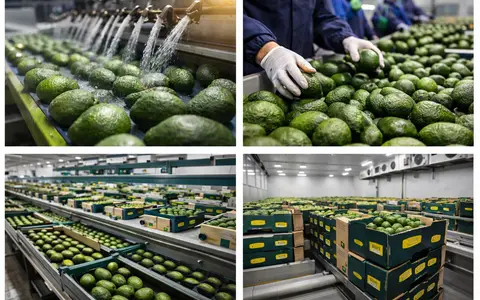
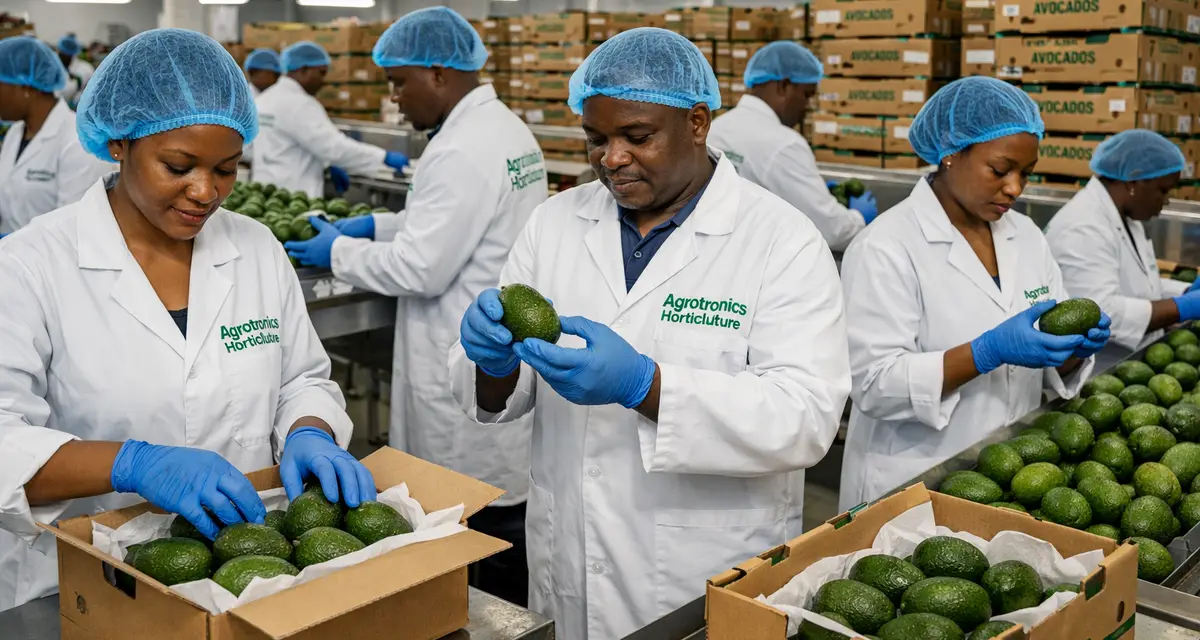
Before fruit can be exported, it has to pass through a packhouse for washing, sorting and grading. This stage involves labour, water, packhouse infrastructure and quality control systems, and the cost here is largely driven by volume and the level of sorting precision required. Buyers who demand tighter size and quality tolerances generally require more intensive grading, which adds to this cost layer.
Packaging and Carton Costs
Once graded, avocados are packed into export cartons sized and ventilated specifically for the fruit. Packaging costs are influenced by the type of carton used, the volume ordered, and whether the buyer requires private label or custom branded packaging rather than generic cartons. Private labelling generally adds cost because it requires buyer-specific printing and tighter production runs compared with standard cartons.
Cold Storage Costs
Avocados are highly perishable, so cold storage before shipment is a necessary cost rather than an optional one. The cost here is shaped by how long fruit needs to sit in cold storage before it is loaded — shipments that move quickly through the supply chain generally incur lower storage costs than those that sit for extended periods awaiting space on a vessel or aircraft.
Freight Costs: Sea vs Air
Freight is usually the single largest cost component, and the choice between sea and air freight has a major effect on the total. Sea freight costs less per kilogram but takes considerably longer in transit, which works well for Hass avocados given their longer shelf life. Air freight costs more per kilogram but dramatically reduces transit time, which suits Fuerte avocados and other shorter-shelf-life fruit, or shipments where speed to market outweighs the higher freight cost. Our sea freight vs air freight comparison looks at this trade-off in more detail.
Documentation and Certification Fees
Export shipments require a range of documentation — phytosanitary certificates, certificates of origin, and compliance records — each of which carries its own administrative or certification fee. Farms and exporters that hold certifications such as GLOBALG.A.P also bear the recurring cost of maintaining that certification, which is a cost of market access rather than a per-shipment charge.
Freight Forwarding and Customs Clearance
Moving a consignment through the port or airport and into the destination country typically involves a freight forwarder or clearing agent, who charges for arranging transport, handling customs declarations, and coordinating with shipping lines or airlines. These charges generally scale with shipment complexity and the number of parties involved in coordinating clearance at both ends.
What Actually Drives Costs Up or Down
| Cost Driver | Effect |
|---|---|
| Choosing air freight over sea freight | Increases freight cost, decreases transit time |
| Private label / custom packaging | Increases packaging cost |
| Extended cold storage dwell time before shipment | Increases storage cost |
| Higher grading precision for demanding buyers | Increases packhouse processing cost |
| Larger consignment volumes | Can improve cost efficiency per unit through scale |
| Additional certifications required by buyers | Adds recurring compliance cost |
Because so many of these costs are interconnected, exporters who plan the full chain — from packhouse to final delivery — tend to manage costs more effectively than those who price each stage in isolation.
Rather than looking for a fixed export cost figure, exporters and buyers are better served by understanding which levers — freight method, packaging specification, certification requirements and storage time — they can adjust for their particular shipment. This is also why working with an established partner that manages packhouse processing, cold chain logistics and export documentation under one roof can simplify cost planning considerably.