Anyone new to the avocado export trade — whether a first-time exporter or an international buyer evaluating a Kenyan supplier — will quickly encounter a set of recurring terms and acronyms. This glossary defines the most important ones in plain language, with links to deeper guides where they exist, so each term can be understood on its own.
Dry Matter Content
Dry matter content is a measurement of the proportion of an avocado that is solid matter rather than water, and it is the standard way exporters determine whether fruit is mature enough to harvest. Avocados picked below the required dry matter threshold will not ripen properly after harvest, making this one of the most important quality checks before any fruit enters the export chain. See our dry matter content and maturity testing guide for more detail.
Phytosanitary Certificate
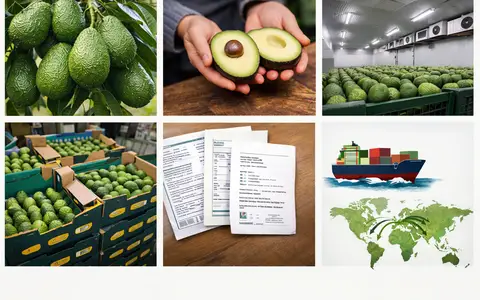
A phytosanitary certificate is an official document confirming that a consignment of fruit has been inspected and is free from pests and diseases of quarantine concern. For Kenyan avocado exports, this certificate is issued by KEPHIS and is required by virtually every destination market before a shipment can clear customs. Read our KEPHIS phytosanitary certificate guide for the full process.
Certificate of Origin (COO)
A Certificate of Origin is a trade document that verifies the country in which a product was grown or manufactured — in this case, confirming that the avocados in a consignment were grown and exported from Kenya. It is often required for customs clearance in the destination country and can be relevant to preferential trade arrangements between countries.
GLOBALG.A.P
GLOBALG.A.P is an internationally recognised certification standard for good agricultural practice, covering food safety, traceability, worker welfare and environmental management at farm level. It has become close to a baseline requirement for accessing many international retail and distribution channels, particularly in Europe. See our GLOBALG.A.P certification guide for what it involves for Kenyan farms.
KEPHIS
KEPHIS, the Kenya Plant Health Inspectorate Service, is the Kenyan government body responsible for inspecting export produce and issuing phytosanitary certificates. KEPHIS inspection and certification is a mandatory step in the Kenyan avocado export process.
AFA
AFA, the Agriculture and Food Authority, is the Kenyan regulatory body responsible for licensing and regulating agricultural produce, including horticultural exports such as avocados. AFA licensing is one of the regulatory requirements exporters must satisfy to operate legally in Kenya’s export sector — see our AFA licensing requirements guide for more detail.
IPPC
The IPPC, the International Plant Protection Convention, is the global treaty framework that underpins phytosanitary standards used in international trade, including the format and requirements of phytosanitary certificates. Compliance with IPPC-aligned standards is part of why Kenyan phytosanitary certification is recognised by destination markets worldwide. Our IPPC compliance guide covers this in more depth.
FOB (Free on Board)
FOB, or Free on Board, is a shipping term meaning the seller’s responsibility for the goods ends once they are loaded onto the shipping vessel at the port of origin. From that point, the buyer assumes responsibility for freight costs, insurance and risk during transit. FOB pricing is common in international fresh produce trade and is one of the terms worth understanding when comparing the cost of exporting avocados from Kenya.
CIF (Cost, Insurance and Freight)
CIF, or Cost, Insurance and Freight, is a shipping term where the seller covers the cost of the goods, insurance, and freight charges to the destination port. Unlike FOB, the seller’s responsibility extends through the sea voyage to the named port of destination, after which the buyer takes over.
Cold Chain
The cold chain refers to the unbroken sequence of temperature-controlled handling and storage that perishable produce like avocados must pass through, from packhouse to cold storage, transport, and final delivery. A break anywhere in the cold chain can accelerate ripening and cause quality loss. Our avocado cold chain management guide explains this process in full, and Agrotronics Horticulture’s cold storage service supports it directly.
Packhouse
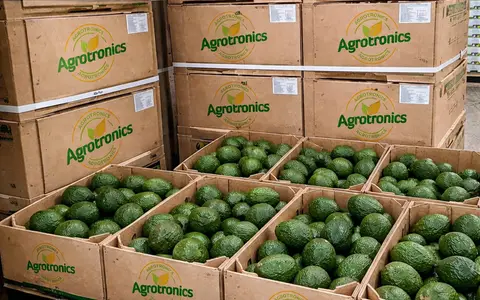
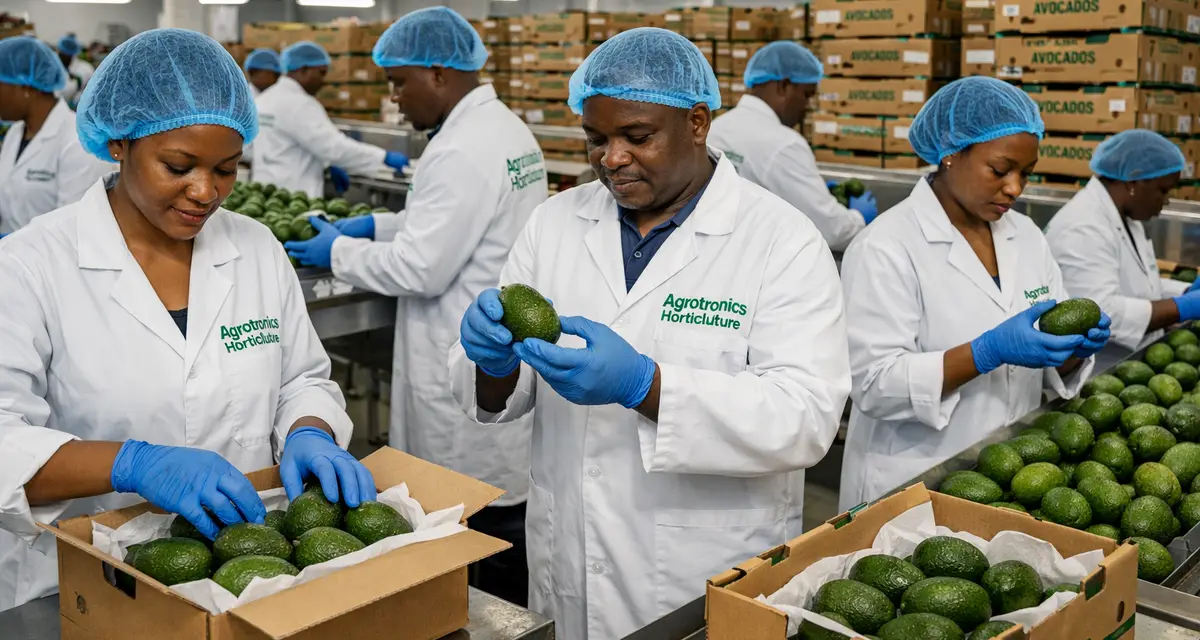
A packhouse is the facility where harvested avocados are washed, sorted, graded and packed into export cartons before dispatch. It is the central processing point in the export chain, where raw farm produce becomes an export-ready consignment. See Agrotronics Horticulture’s packhouse operations for how this process works at our Nairobi facility.
Grading
Grading is the process of sorting avocados by size, weight and external quality to meet the specifications required by different buyers and markets. Consistent grading is essential for supermarkets and large distributors who expect uniformity within every carton. Read our avocado grading standards guide for the criteria typically used, and explore Agrotronics Horticulture’s grading service for more on how it is carried out.
Private Label
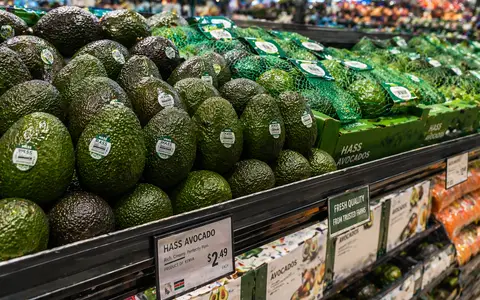
Private label refers to packaging an exporter’s produce under a buyer’s own brand rather than the exporter’s brand — common where retailers or distributors want avocados packaged and labelled specifically for their own store or product line. Private label arrangements require close coordination on packaging specifications and labelling between exporter and buyer. See our private label avocado packaging guide for more on how this works in practice.
Understanding these terms is a useful starting point for any buyer evaluating a Kenyan supplier, or any new entrant working through how to become an avocado exporter in Kenya. Each term above links to a deeper guide where one exists, so this glossary can serve as a hub for navigating the wider Agrotronics Horticulture Knowledge Centre.